
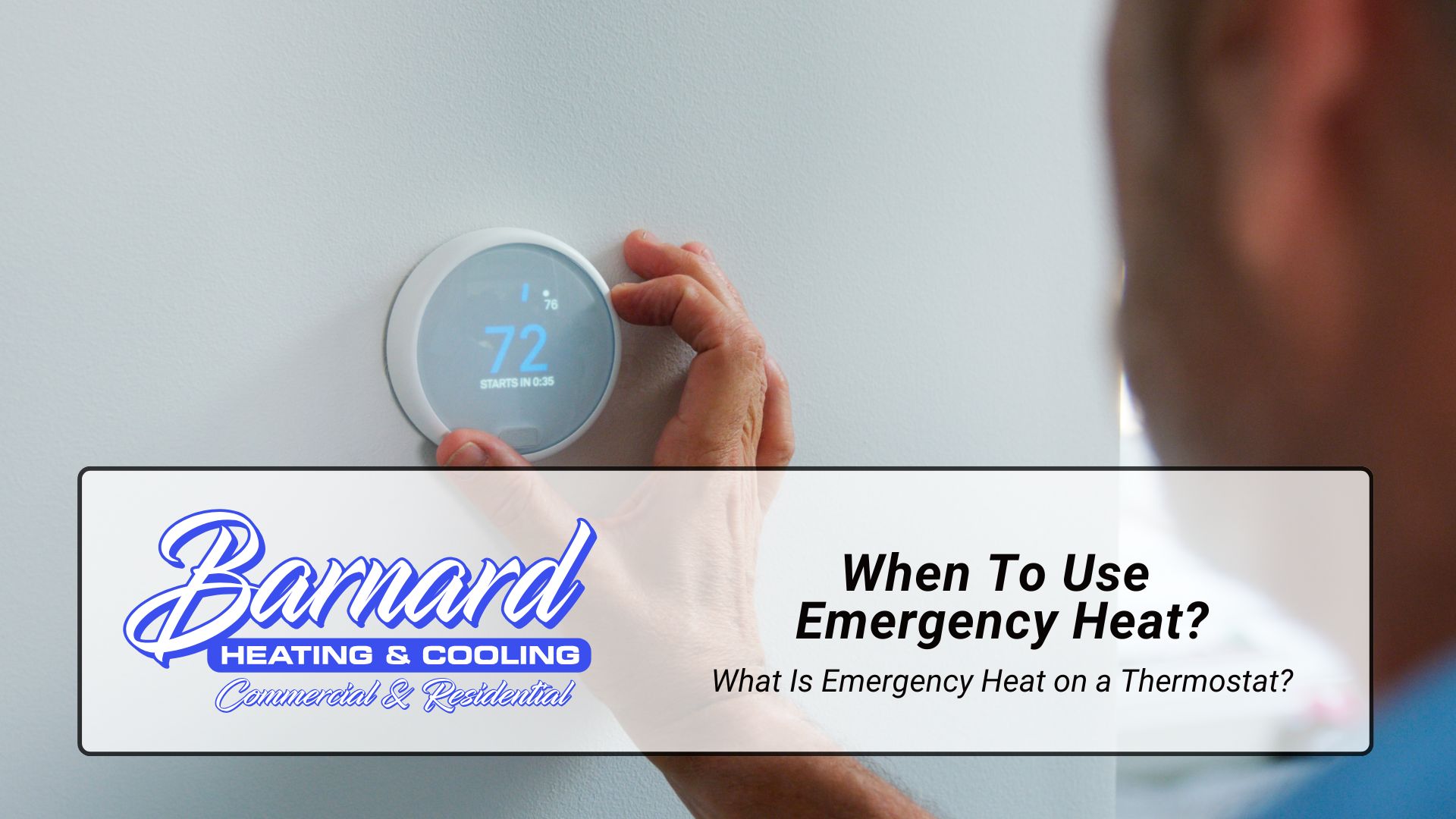
Emergency heat is a backup heating mode built into most heat pump thermostats, but knowing when to activate it can save you from costly energy bills and prevent further system damage. This feature is designed to keep your home warm when your heat pump can't operate normally, but it's not intended for everyday use.
What Is Emergency Heat on a Thermostat?
Emergency heat, often labeled as "EM heat" or "E-heat" on your thermostat, bypasses your heat pump entirely and relies solely on electric resistance heating or a backup heating source. Heat pumps typically extract warmth from outdoor air to heat your home efficiently. When you switch to emergency heat, you're telling the system to skip this energy-efficient process and use auxiliary heating instead.
According to the U.S. Department of Energy, heat pumps are up to 75% more efficient than electric resistance heating. That's why emergency heat should remain a temporary solution instead of a long-term heating strategy.
When You Should Use Emergency Heat
You'll need to activate emergency heat in specific situations where your heat pump can't function properly. If your heat pump stops producing warm air during cold weather, switching to emergency heat prevents your pipes from freezing and keeps your family comfortable while you arrange for repairs.
Severe ice buildup on your outdoor unit can also warrant the use of emergency heat. While heat pumps have defrost cycles to manage normal frost, excessive ice accumulation indicates a malfunction that requires professional attention. Emergency heat keeps your home warm until a technician can address the underlying issue.
Strange noises from your heat pump, such as grinding, squealing, or banging, indicate mechanical problems. In these cases, emergency heat protects your system from further damage while you wait for service.
Why Emergency Heat Shouldn't Be Your Default Setting
Running on emergency heat continuously will significantly increase your utility costs because electric resistance heating consumes much more energy than your heat pump's normal operation. You're essentially paying for the least efficient heating method available in your home.
Emergency heat also puts unnecessary wear on your backup heating elements. These components weren't designed for constant use and will deteriorate faster if you rely on them as your primary heat source.
When To Call for Professional Help
If you find yourself using emergency heat frequently, your heat pump likely has a problem that needs professional diagnosis. Common issues include refrigerant leaks, compressor failure, faulty reversing valves, or sensor malfunctions. These problems won't resolve themselves and typically worsen over time.
Any time you need to switch to emergency heat, schedule an inspection as soon as possible. A qualified HVAC technician can identify the root cause, make necessary repairs, and restore your system's efficient operation.
Your thermostat's emergency heat setting provides valuable protection during heating system failures, but it's meant as a temporary bridge to professional service, not a permanent heating solution. Contact the experts at Barnard Heating and Cooling to diagnose and repair your heat pump, serving homeowners and businesses throughout Carthage, Missouri, and the surrounding communities.